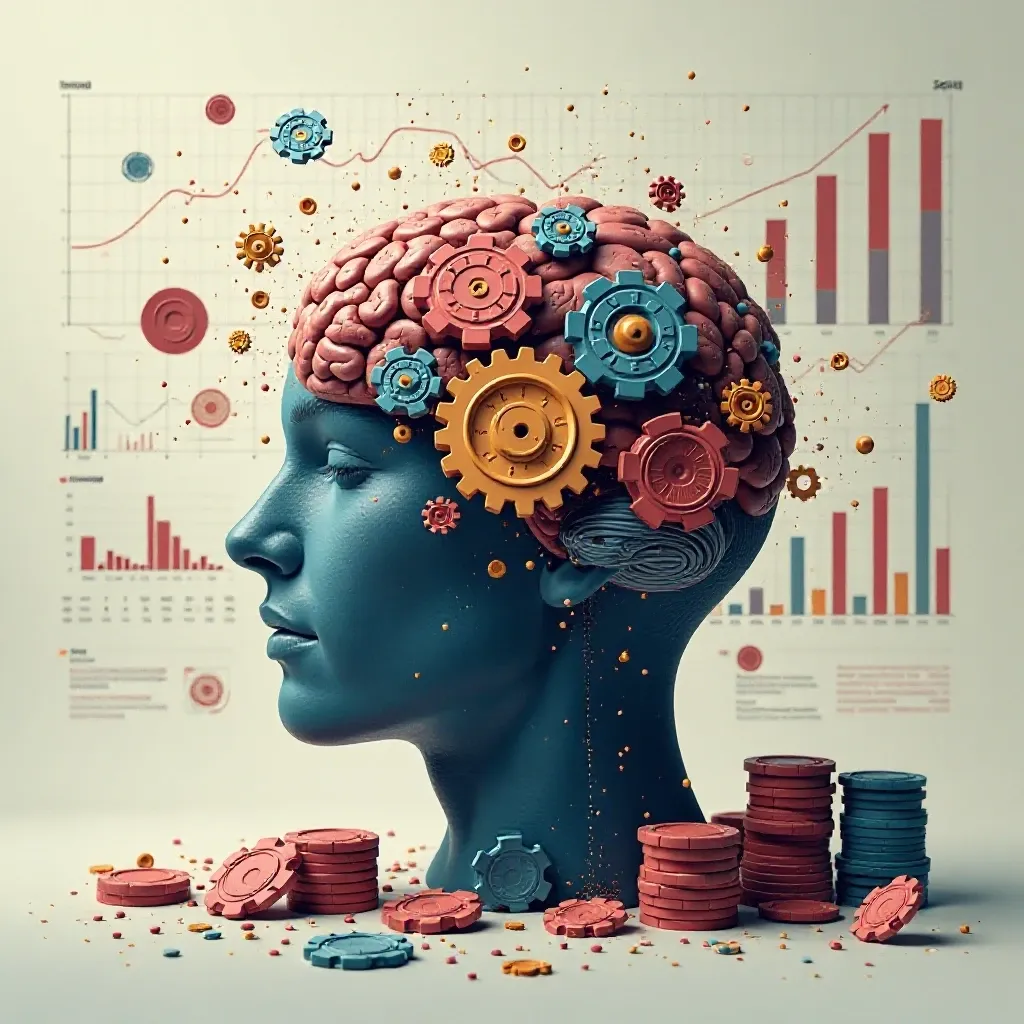
Ever made a snap judgment about a friend who swore they had a “sure thing” investment, only to see it tank? We’ve all been there. That’s outcome bias in action – judging a decision based on its result, not the quality of the thought process behind it. It’s like saying a broken clock is always wrong, even though it’s right twice a day!
This way of thinking is more pervasive and damaging than you might think. It clouds our judgment, making us believe that good results automatically equal a brilliant strategy, and bad results mean someone messed up. But what if the “brilliant strategy” was just dumb luck, and the “mistake” was simply an unavoidable risk gone wrong?
The truth is, life is messy. Good decisions can lead to bad outcomes, and terrible decisions can sometimes (through sheer chance) lead to success. Understanding this is the first step to breaking free from the trap of outcome bias. Forget judging solely on results; let’s dive into how to make better decisions, regardless of what the universe throws our way.
The Problem with Outcome-Based Thinking
Life often teaches the wrong lessons. A winning lottery ticket bought with illogical reasoning does not suddenly make that reasoning sound. This highlights the core issue with outcome-based thinking: it fixates on results while ignoring the process. When we solely judge decisions by their outcomes, we create a flawed assessment system that hinders learning and reinforces potentially damaging behaviors.
Consider a project at work. A team might rush through planning, skip crucial steps, and yet, through sheer luck or unforeseen circumstances, the project succeeds. The outcome? A win! But the lesson learned might be, “Rushing works!” This is a dangerous conclusion. Focusing solely on the positive outcome masks the deficiencies in the process that could easily lead to failure in the future.
Conversely, a well-planned, meticulously executed project might fail due to an unexpected market shift or a competitor’s aggressive move. Despite the sound decision-making, the “bad” outcome might lead to the incorrect conclusion that the process was flawed. This inability to separate skill from luck creates a distorted view of reality.
Annie Duke, a former professional poker player, describes this as “resulting.” In poker, a player might make the correct decision based on probabilities and available information, yet still lose the hand. Focusing solely on the loss ignores the fact that the player maximized their chances of winning. Outcome bias blinds us to the nuances of decision quality, trapping us in a cycle of flawed assessment and hindering our ability to learn and improve.
Common Cognitive Biases that Cloud Judgment
Humans strive for rationality, but our brains are wired with shortcuts that can lead to systematic judgment errors. These mental glitches, known as cognitive biases, significantly skew our perception and analysis of outcomes, leading to flawed conclusions. Recognizing these biases is the first step in mitigating their negative impact on decision-making.
Hindsight Bias: “I Knew It All Along”
Hindsight bias is the insidious tendency to believe, after an event has occurred, that one would have predicted it correctly. This “I knew it all along” phenomenon distorts our ability to accurately assess past decisions. For example, after a volatile stock plummets, investors might claim they foresaw the downturn, even if their previous actions indicated otherwise. To counter this, maintain a detailed record of your predictions and reasoning before an outcome is known. This provides an honest benchmark against which to evaluate your actual foresight.
Confirmation Bias: Seeking What You Already Believe
Confirmation bias describes our inclination to favor information that confirms existing beliefs while ignoring or downplaying contradictory evidence. If someone believes a particular investment strategy is foolproof, they might selectively focus on success stories while overlooking failures. To combat confirmation bias, actively seek out dissenting opinions and challenge your assumptions. Embrace intellectual humility and be willing to revise your beliefs in the face of compelling evidence.
The Halo Effect: When One Trait Blinds You
The halo effect occurs when a positive impression in one area unduly influences our perception of someone or something in other areas. A charismatic leader, for instance, might be perceived as highly competent in all aspects of their role, even if evidence suggests otherwise. A friend of mine, swayed by a company’s sleek marketing, invested heavily without scrutinizing their financials, blinded by the “halo” of a polished image. To mitigate the halo effect, consciously evaluate each attribute independently. Resist the temptation to let one positive trait overshadow potential weaknesses.

Unpacking the Role of Luck and Skill
Life is a tapestry woven with threads of skill and chance. Disentangling these threads is essential for making sound judgments and learning from our experiences. Some endeavors, like chess or performing surgery, are primarily governed by skill. Expertise, practice, and strategic thinking are the main determinants of success. In these realms, consistent effort typically yields predictable results.
Conversely, activities like playing the lottery or navigating certain investment landscapes are heavily influenced by luck. While knowledge and strategy might offer a slight edge, randomness and probability reign supreme. Winning the lottery is overwhelmingly a matter of chance, regardless of how “lucky” one might feel. Similarly, some investment opportunities involve such high levels of uncertainty that outcomes are largely unpredictable. It’s like flipping a coin – skill can’t influence which side lands up.
Personally, when evaluating a decision, I try to dissect the contributing factors. I consider: What aspects were within my control? What external forces were at play? Was the outcome repeatable given the same inputs, or was it a fluke? By honestly assessing the degree of randomness involved, it becomes easier to avoid attributing success solely to skill or failure entirely to a lack of it. It’s about calibrating expectations and recognizing that even the most skilled individuals can be undone by a twist of fate.
Ultimately, acknowledging the role of luck fosters humility. It reminds us that we are not always the masters of our destinies and that unforeseen circumstances can profoundly impact our lives. Embracing this perspective allows for more realistic self-assessment and a greater appreciation for both the triumphs and setbacks we encounter.
Thinking in Bets: A Probabilistic Approach
Life is a series of decisions, big and small, each carrying its own degree of uncertainty. We often strive for certainty, seeking definitive answers before acting. However, the reality is that most decisions are made with incomplete information and a hefty dose of the unknown. This is where the framework of “thinking in bets” becomes invaluable. Popularized by author and former poker player Annie Duke, this approach encourages us to embrace uncertainty and make more rational decisions by focusing on probabilities and potential outcomes. It’s about shifting our mindset from seeking absolute truths to assessing the likelihood of different scenarios and managing risk accordingly.
At its core, thinking in bets involves quantifying uncertainty. Instead of asking “Is this the right decision?”, we ask “What is the probability that this decision will lead to a successful outcome?”. This requires a shift in perspective, forcing us to acknowledge the range of possibilities and assess the relative likelihood of each. It’s about moving beyond gut feelings and intuitions and grounding our decisions in data, analysis, and a clear understanding of potential risks and rewards.
The beauty of this approach lies in its adaptability. Whether you’re making investment decisions, strategizing for a business venture, or even navigating personal relationships, thinking in bets provides a structured framework for evaluating options and making informed choices. The focus is on the process, not necessarily the outcome. A good decision can still lead to a bad outcome due to unforeseen circumstances, and vice-versa. By focusing on the quality of our decision-making process, we increase our chances of long-term success, even in the face of uncertainty.
Making Calculated Bets
The essence of “thinking in bets” involves evaluating probabilities and potential outcomes to arrive at what can be referred to as calculated bets. Imagine you’re considering launching a new product. A traditional approach might focus solely on the potential for high sales, perhaps overlooking the risks involved. However, a ‘thinking in bets’ approach demands a more nuanced analysis.
First, you’d assess the probability of success. This involves considering factors such as market demand, competition, production costs, and marketing effectiveness. Market research can quantify some of these factors. Let’s say your research suggests a 60% chance of the product being well-received. Next, you would estimate the potential outcomes under different scenarios. If the product succeeds, what’s the potential profit? If it fails, what are the potential losses, including sunk costs in research and development, marketing, and inventory?
With these probabilities and potential outcomes in hand, you can calculate the expected value of the “bet.” This involves multiplying the probability of each outcome by its associated value and summing the results. For instance: (0.60 Potential Profit) + (0.40 Potential Loss). If the expected value is positive, it suggests the bet is worth taking, even with the inherent risks. Analyzing market demand, competition, production expenses, and market efficiency is vital. It is also crucial to acknowledging and accepting risks involved.

Actionable Strategies for Better Decision Evaluation
Evaluating decisions effectively goes beyond simply looking at the end result. It requires a shift in focus from outcomes to the process that led to those outcomes. After all, a good decision can sometimes lead to a bad result due to unforeseen circumstances, and vice versa. By concentrating on improving the decision-making process itself, one can drastically increase the likelihood of positive results over time. Here are some actionable strategies to help you evaluate your decisions more effectively:
Keep a Decision Diary
One powerful technique is to maintain a “decision diary.” This involves documenting the context surrounding a decision before you know the outcome. Note the information you had available, the assumptions you made, the different options you considered, and the reasoning behind your final choice. Regularly reviewing these entries provides invaluable insights into your decision-making patterns, biases, and areas for improvement. For example, you might realize you consistently undervalue the input of a particular colleague or that you tend to overestimate your ability to predict future events. A decision diary transforms anecdotal experiences into quantifiable data, enabling more objective self-assessment.
Embrace Red Teaming
“Red teaming” is a strategy borrowed from military and intelligence circles. It involves assigning a person or team to actively challenge your assumptions and play devil’s advocate. Their job is to identify potential weaknesses in your plan, poke holes in your logic, and surface alternative perspectives. This active opposition can expose blind spots and force you to defend your reasoning, leading to a more robust and well-considered decision. Don’t view red teaming as personal criticism; embrace it as a valuable tool for stress-testing your ideas.
Actively Seek Diverse Perspectives
Surrounding yourself with “yes” people can feel good in the short term, but it’s a recipe for poor decision-making. Actively seek out individuals with diverse backgrounds, experiences, and viewpoints. Encourage them to share their opinions, even if they differ from your own. Different perspectives can highlight risks you hadn’t considered, uncover hidden opportunities, and challenge pre-conceived notions. Make a point of soliciting feedback from those who are likely to disagree with you – their insights are often the most valuable.
Focus on “Information at the Time”
It’s easy to fall into the trap of judging a past decision based on information that only became available after the decision was made. This is known as hindsight bias, and it can lead to unfair and inaccurate evaluations. Instead, strive to evaluate the quality of the decision based solely on the information you had at your disposal at the time. Ask yourself: “Given what I knew then, was this a reasonable and logical choice?” This approach acknowledges that even the best decisions can sometimes lead to unfavorable outcomes, and it promotes a more fair and constructive assessment of your decision-making skills.
Conclusion
In navigating the complexities of people search and decision-making, a probabilistic mindset is a powerful tool. It’s less about predicting the future with certainty and more about understanding the range of possibilities and their associated likelihoods. By focusing on the decision-making process itself – gathering information, assessing probabilities, and understanding potential biases – individuals can significantly improve the quality of their choices.
Embracing uncertainty is not a sign of weakness, but rather an acknowledgment of reality. No one possesses a crystal ball. Recognizing cognitive biases, such as confirmation bias or availability heuristic, allows for mitigating their influence. Outcome-based observations also offer helpful guidance. By continually refining their assessment of probability, decision-makers become more rational and can make better long-term predictions that yield reliable results. Long-term success is less about being right every time and more about making consistently sound judgments in the face of an uncertain world.